Review: “Performing Entropy” @ Bangkok Kunsthalle
Review: “Performing Entropy” at Bangkok Kunsthalle
The programming at Bangkok Kunsthalle is an incredible effort in raising the caliber of the Thai art scene. Located in the burnt-out, former Thai Wattana Panich building, their recent show – ‘Poetics of Horizontality’, was made up of concrete pieces laid out in a grid on the floor of the gallery. This show came to its conclusion through a participatory sweep and clean-up entitled ‘Performing Entropy’, which took place August 22-24. The artists, Siriwan Simingam and Nalattaphorn Nanta, distinguished these as two separate conceptual pieces despite their common ideas and the current of themes that passed through one to the next.
As conceptual art pieces, both ‘Poetics of Horizontality’ and ‘Performing Entropy’ necessitated getting into the minds of the artists. The concept and intention behind the works were what made them so profound. The viewer had to think in order to understand and to appreciate, and therefore, the physical form of the art itself is either equal to or less important than the ideas and the themes that surround it.
‘Poetics of Horizontality’ was stunning in its original gridwork, but it took on a whole new, and even more conceptual, life in ‘Performing Entropy’ and consequently induced a sense of communal reconstruction. Sweeping away the neat lines of ‘Poetics of Horizontality’ had a ceremonial feel, and rather than feeling sad that it had been destroyed, the solemn and participatory sweep of ‘Performing Entropy’ leaned into the impermanence of ‘Poetics of Horizontality’ by creating new shapes and forms, while still attending to the beautiful context of the original work.
‘Poetics of Horizontality’
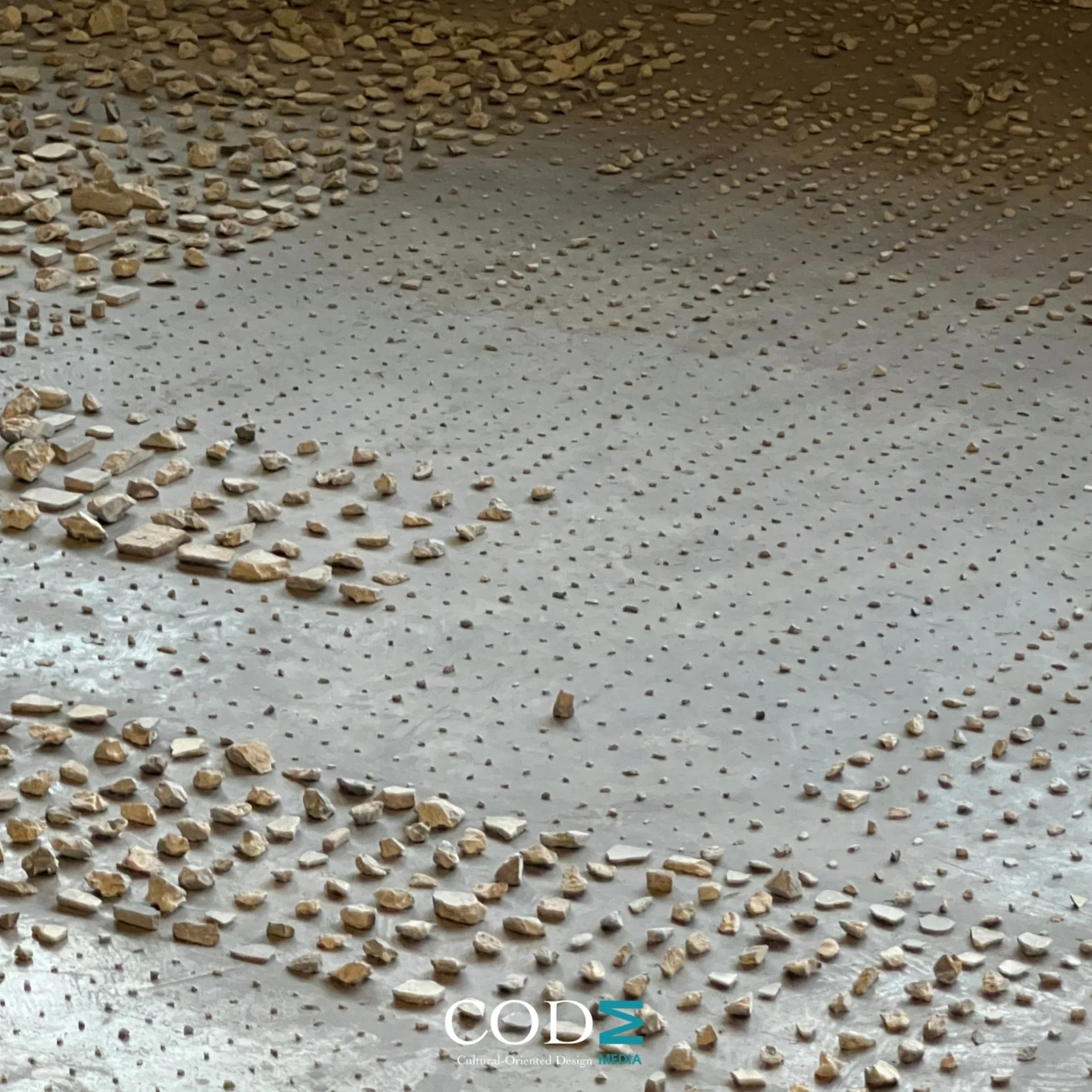
Poetics of Horizontality
For ‘Poetics of Horizontality’, small rocks and bits of concrete were collected from the building that houses Bangkok Kunsthalle itself. The small bits of rubble that made up “Poetics” were laid out orderly and precisely on the floor that was, itself, marked by the passage of time. Rocks of similar size were grouped together in grids and laid out in a neat patchwork. These grids were placed so as to serve, “both as an archive and as a tool of spatial reading – each stone finds its place within a shared structure, while simultaneously contributing to the revelation of a latent spatial order.” In this statement, the artists reflected on how the action of preserving pieces from the building lends an archival tone to the piece. It’s about remembrance, reverence, respect, and ephemerality.
‘Poetics of Horizontality’ made the viewer cautious. Getting too close risked knocking a stone out of place and disrupting the lines. But even then, the artists provided a space to get close and be within the piece. A short pathway curved into the piece so that the viewer could find themselves surrounded by these neat grids on all sides, essentially finding themselves at the center of the art itself.
‘Performing Entropy’
As ‘Poetics of Horizontality’ ended and ‘Performing Entropy’ started, this became the objective. The impermanence of the building itself, the fragile nature of the art within it, and the ensuing sweeping of the art at the end of the show wrapped up into the cyclical and ongoing nature of artistic expression. The ephemerality was always to be part of the piece but the communal reconstruction was where ‘Performing Entropy’ stood out as separate.
.
The artists wrote, “This act references the tradition of Tibetan sand mandalas - meticulous complex geometries which are ultimately destroyed to reflect the Buddhist notion of impermanence.” As the piece was swept away, the act was a piece of conceptual performance art in and of itself.
.
As an additional point of interest, ‘Performing Entropy’ had a beautiful reconstructive nature. It spoke to the continuous character of art from the construction and destruction of the building, with the impulse of capturing and archiving, to the impermanence and eventually the recreation. As attendees swept the hall, they also created their own pieces out of the materials left behind. Small stacks of stones, a mandala, a portrait of a cat, all these were created during ‘Performing Entropy’ and harkened to Buddhist teachings not only in impermanence but also in reconstruction and rebirth.
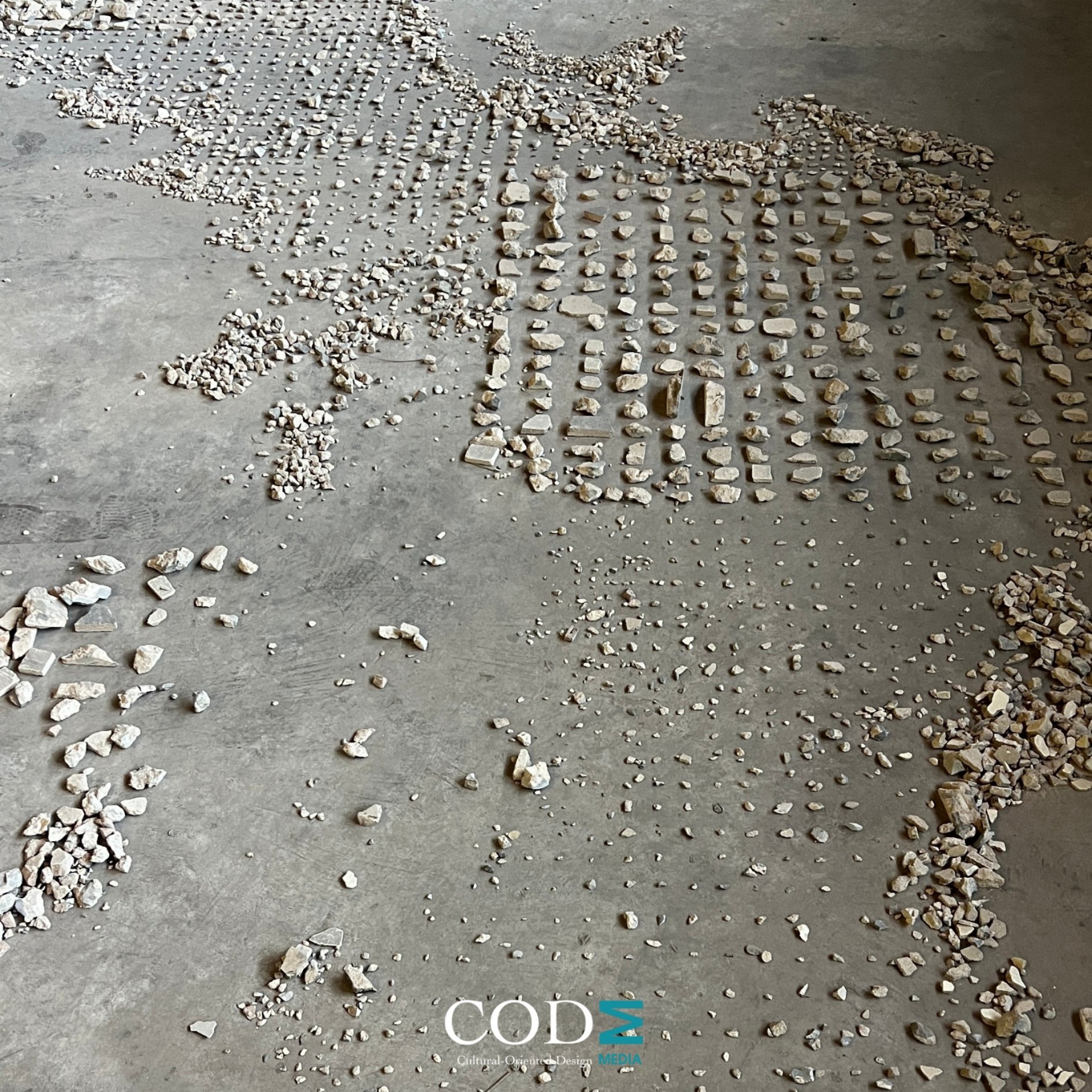
Performing Entropy
“Rather than erasure, the original artwork is reconfigured with all its constituent parts. To sweep in this context is not to clean or neaten, but to recompose and reimagine.” – Artists’ statement
These two pieces are beautifully transient. They’re constantly referencing change, recreation, rearrangement, and rebirth. It is necessarily communal as imagination and renewal are constantly influenced by potentially disruptive forces outside of what any individual can control.
‘Performing Entropy’ was a beautiful and distinctly Buddhist piece and poignant in that way. It’s an exceptional piece of Thai art, and the themes of impermanence, community, and reconstruction, whether intentional or not, come across clearly.
We at CODE Media are excited to see the level of art Bangkok Kunsthalle and their sister organization, Khao Yai Art Forest, have to offer. Right now, their programming is largely performance-based as they undergo construction, and we look forward to seeing what else they will do.